Writing and Photography: Creating the Storyboard


_DSC2454 (8)

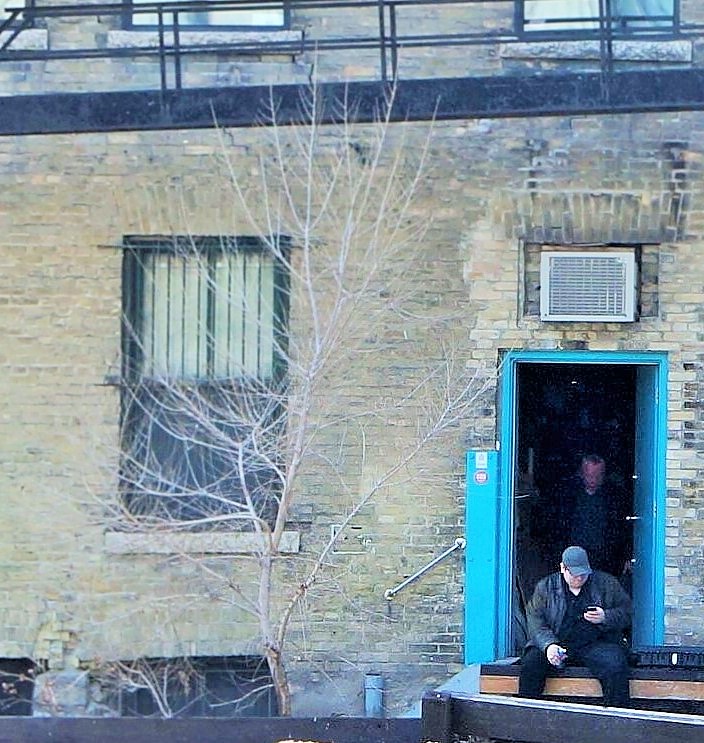
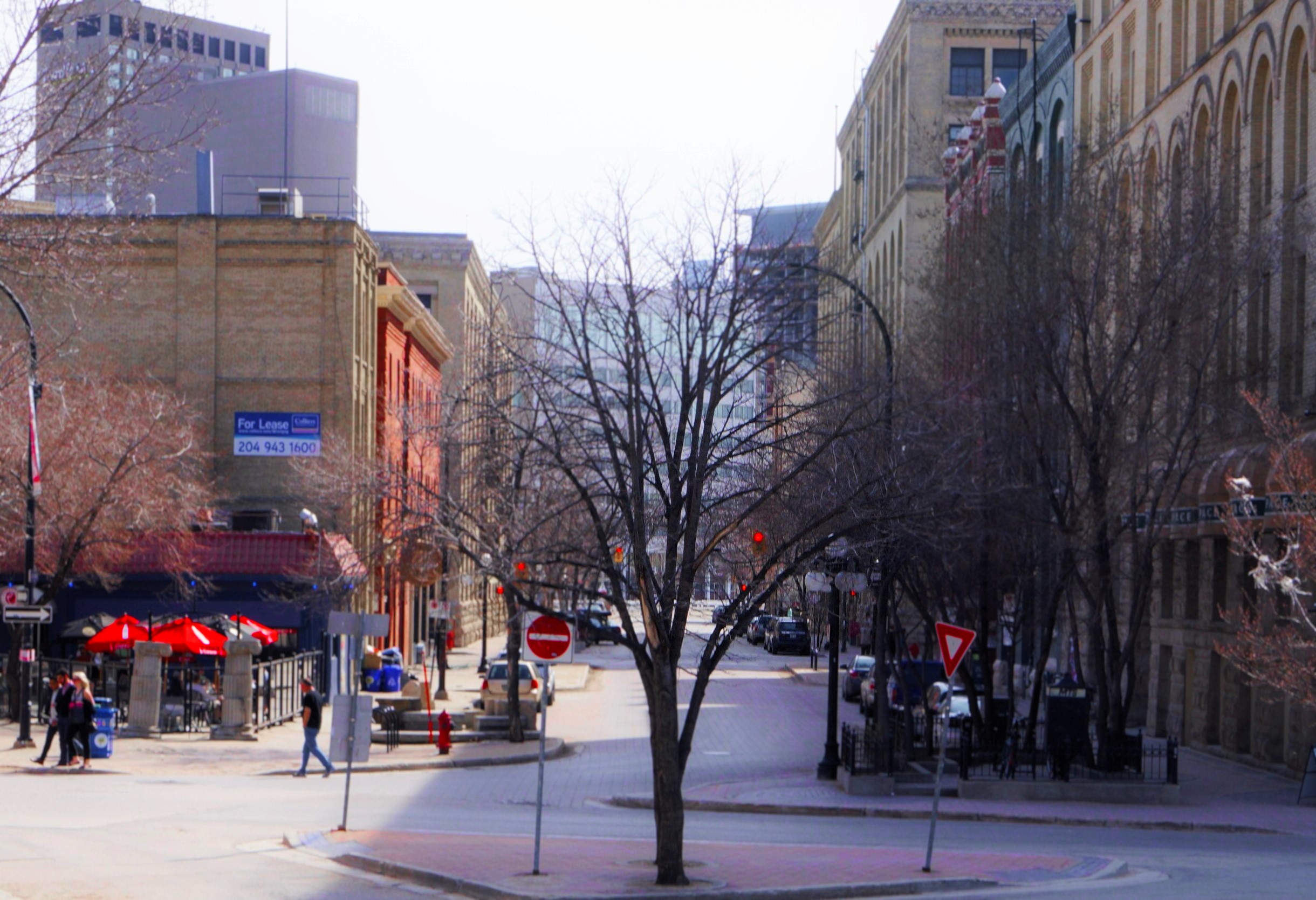
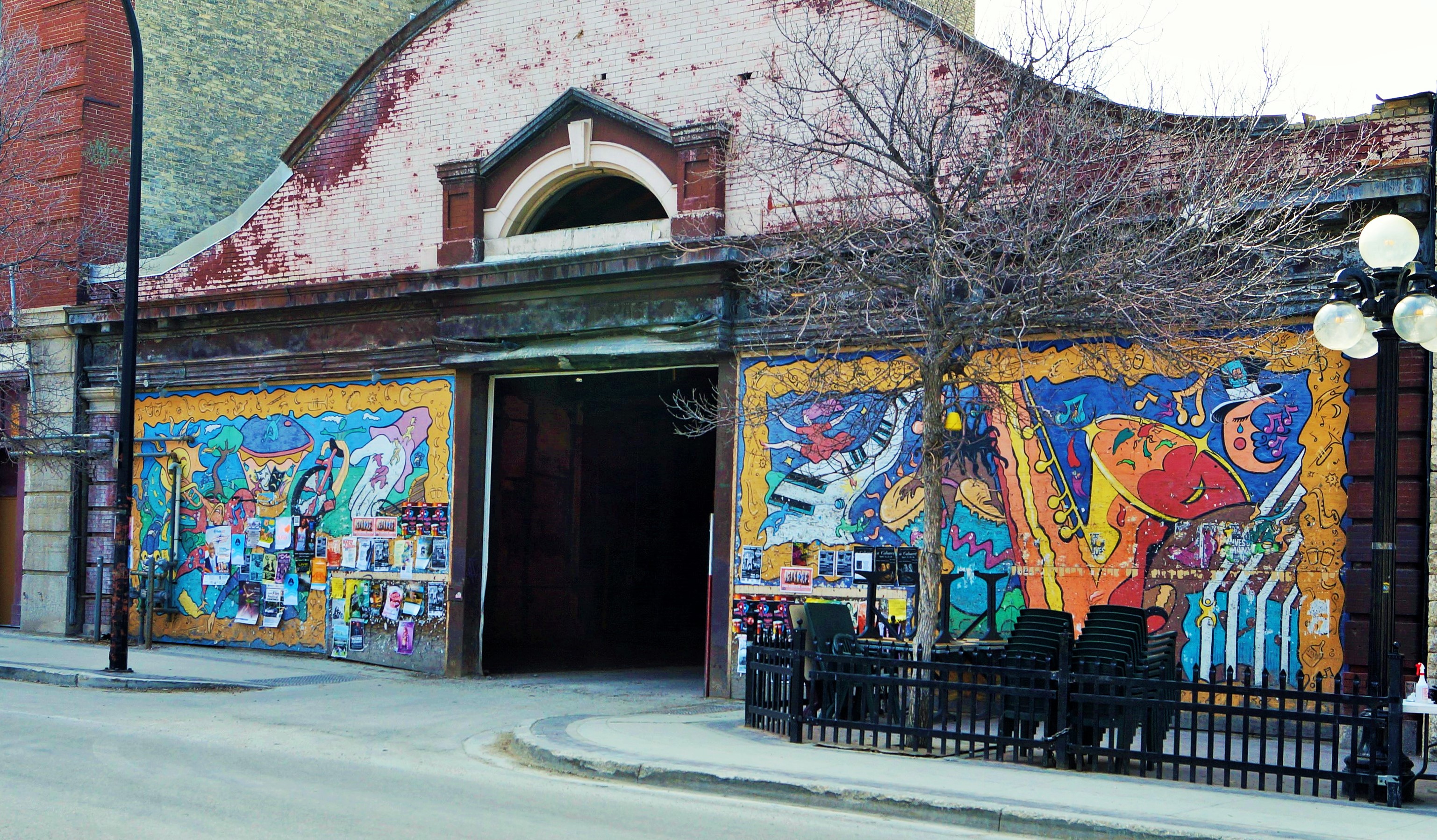
Every writer creates their novels differently and each of us will go through a slightly different process. I am not sure there is one right way. As I begin work on my third novel, for me it is about an idea popping into my head and then it finds a spot to percolate. First of all, I consider myself a storyteller learning the craft of writing. This is perhaps why the story finds its way into my head and then the challenge is turning the story into a novel. Something to read rather than hear. I took a walk yesterday afternoon taking pictures both in my mind and with my camera. The pictures I took which will now become part of my storyboard and then hopefully come alive in the story I create are shared below.

_DSC2454 (9)

I create a storyboard, a frame or outline first in my head and then on paper, well actually  a word file that becomes jam-packed with ideas, research and pictures. I know the beginning and the end as for me the first part to come alive is the plot. Who are the characters? Where does the story take place? Those take hold after the concept of the story. Once the frame is developed the story begins to take life both on paper and in my head. The story takes on a life of its own in my mind and  pulls information from past experiences, thoughts and ideas linking to what I want to create. The magic of the filing cabinet that makes up our minds is filled with countless experiences and the more we live and experience life the more information to draw from in our storage compartment. Everything that happens can find its way into a story or a piece of writing. I research character and setting filling in my frame that will guide the story and provide substance to character, setting and plot.

_DSC2454 (6)

Yesterday was a day about setting. The setting of this story will be important to the characters and the plot. More so than in my other books. The setting will help the reader understand my characters and contribute to the plot as well as conflict. The story is clear in my head so to fill in my frame I took some pictures to create the vision for the words I want to create to tell the story. Without a question I find writing is a lot harder than storytelling.

_DSC2455 (4)

As I was envisioning the setting, trying to take in the environment, camera dangling down from my neck, I saw the picture I wanted to take. Two or three times I took the camera up to capture the scene and each time the screen was black. No image. I checked to see if the camera was turned on and it was. I tried again and still nothing. Adjusted focus and still the black screen is all that appeared. I was and must have looked confused, unsettled as a man walking by simply said, “You will need to take off the lens cap.” Has there ever been better advice to a photographer than that.

_DSC2457 (3)

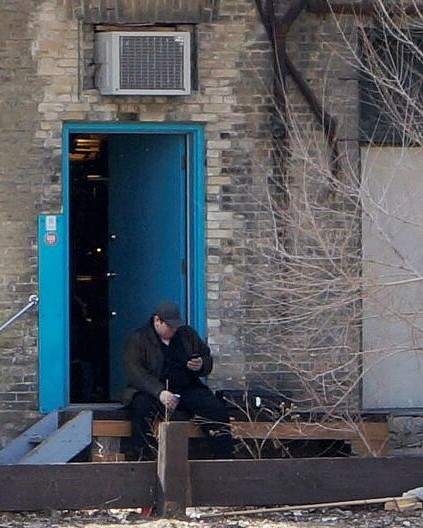
All picture are taken in the beautiful historic ‘Exchange District’ in Winnipeg, Manitoba.

_DSC2460 (2)                                       _DSC2464_DSC2458


Posted in Travel?Photography, Work in Progress | Tagged , , , , , , , , , | Leave a comment

Hey Mom, Thank-you!!


7584-mother

Life is filled with so many people who influence us and help to make us who we are. Although many people say it and somehow seem to believe it, there is no such thing as equal opportunity. My brother, sister and I have all been very lucky. My parents just celebrated their 58th wedding anniversary and through all the ups and downs of raising a family, losing a child, losing their parents as well as all the moments of sure joy and despair that we call life, they have been there for me, my siblings and each other, not only by their  words, but more importantly by their actions on how to respect ourselves and others.

My mom is a character and has character. I guess that is what happens when you have four children in less than five years. Growing-up we didn’t have much money, but we were never poor. We always had food on the table but often it wasn’t much. Big bags of puff wheat cereal, porridge or on those special days corn flakes. Rarely bought real milk but grew up on powdered milk. For years I thought milk was blue. She sang crazy made up songs to us or ones she remembered from girl guides. We played games or had a picnic outside on the front step. We didn’t have much but we had everything.

She taught us to respect our neighbours and we called them all Uncle and Auntie. We played on the street and everybody knew everybody and watched out for each other and we all felt safe. We really did play road hockey and cars did slow down as they tried not to drive over our goal posts made of snow. We played catch, kick the can and football with the kids in our neighbourhood. Everyone on our street was family and the other children of the neighbourhood were my brothers and sisters as we would often pitch tents in the back yard or sell lemonade on the street.

My mom became the first woman who I knew to get a job. She worked at Woolco in the Pet Store and there started our wide range of pets from budgies called “Blue Ball” and “Green Ball” ingeniously named by my dad. We had a Chameleon that got lost in the shag carpet the first day it was home. She used these opportunities to teach us about responsibility. We all learned to cook. She was working and to be a family meant you helped each other out. We had our turns making supper. My dad also was a good cook and in those days that wasn’t common. Like all kids we thought we were hard done by but on the good side was with my mom working we could afford a few more things and life got a little easier.

When the boys of the house started dating my mom would always say ‘Treat them with Respect” as we walked out the door. She told us how to hold our knives and forks, to chew with our mouths closed and to eat our vegetables. She taught us not to swear and to this day if I say a word she doesn’t like I am sure to get the look.

She taught us that our voices mattered. We were allowed to talk politics and say what we felt even when we were young. We were taught to respect each other and that school was important. In 1969 we purchased the World Book Encyclopedia and I am sure by the end of the second year we had the entire set read to us, except perhaps Volume A which our dog, Myha, happened to mistake for a bone so certain pages were a little hard to read.

We were never beaten or abused despite at times not doing as we were told. They took us camping and gave us the zest for travel and seeing the beauty of the world. When you are seven the Rocky Mountains seemed bigger and a moose sticking their head through the window of the car is an experience one never forgets. Bee stings, being chased by bears, drinking water from a pristine lake in northern Saskatchewan taught us adventure. Laughing when we ran out of gas on a deserted northern road, taught us you can overcome the hardships.

We ate together as a family including breakfast on the weekends. There was no sleeping-in, even if you stayed out late. You had to be responsible. Responsible to yourself and the rest of the family. She taught us that you needed to be able to take care of yourself. She would say ‘It is not going to be your wife’s job to iron your shirts or cook your meals?’ We all learned how to cook, do laundry and even wash floors. There were no jobs for men or for women, but jobs to do. She taught us men and women were equal and that women could do anything.

She taught us not to judge a book by its cover and that beauty comes from the inside. Despite having all these great lessons like all kids I have made mistakes. The mistakes I have made have been in not remembering those lessons I was taught.

Growing-up I couldn’t say with 100 per cent certainty but I think she hugged us everyday, even when we were just learning to be the people we are meant to be. Even now at my age, it still feels pretty good to get a hug from my mom.

Posted in My Writings | Tagged , , , , , , , | Leave a comment

Protecting our Children – Are We Doing Enough?

children

There is a common expression ‘We Do Not Inherit the Earth from Our Ancestors; We Borrow It from Our Children’ and as we reflect on how we are doing as a society as citizens we must ask ourselves if we are doing a good enough job not only preserving our planet for future generations but also protecting and recognizing our responsibility for providing a safe and caring world for our children. If one is to look at recent news items one could not help but think some of our decisions and actions for making the world a better place for children and future generations need to not only be questioned but changed.

Creating a world that is truly fit for children does not imply simply the absence of war. It means having the confidence that our children would not die of measles or malaria. It means having access to clean water and proper sanitation. It means having primary schools nearby that educate children, free of charge. It means changing the world with children, ensuring their right to participate, and that their views are heard and considered. It means building a world fit for children, where every child can grow to adulthood in health, peace and dignity.

Carol Bellamy

INTERNET SAFETY:
Technology has certainly created a unique challenge to society in our desire to make our world safe for children. Although our ability to access information, share images and ideas has increased we have also had a rise in cyber-bullying, sexual exploitation and a large number of arrests in regards to these serious child protection issues. It is important for all of us to understand that even the increased access of individuals to pornography, music and video images that may have violent and sexual images that may be appropriate for adults can be easily accessed by children and are certainly not appropriate for children. It is one thing to arrest those involved in child pornography and cyber-bullying, but perhaps it is time to attack the Internet providers that house these sites that are destroying the lives of children and families. The cost to society is enormous and those individuals who are profiting off of criminal activities need to be prosecuted.

CHILD POVERTY:
Since the declaration to abolish child poverty it has in fact risen. We must all recognize that at times purely financial solutions are not meeting our need to protect children. Children in poverty are at greater risk of health, social and educational needs. Currently being born into poverty means you will have a life of poverty.
Providing decent well-paying jobs for families is certainly a start in the right direction. We must question businesses and individuals who put their increase in profits above the greater good of society. If a company is already making a profit but is laying off workers which increases poverty that is a problem. We must question whether we need policies to change a corporation’s ability to have ‘dead money’.
Role Models:
We need to work hard at providing role models for our children that have integrity and reflect the values of the kind of society we want to create. Each of us can reflect on ourselves if we provide our own children with the role model they need in our own families. Each of us can look in the mirror and determine what changes we need to make to take on our responsibilities as parents or adults to support children.
We also need to look at our politicians and leaders to determine if they have the character required to be those role models for our children. We do need to hold our leaders to a high standard, even a higher standard than others.

The_Emperor's_Club_Poster

The Emperor’s Club- Video Clip

(A great scene…watch the entire three minutes)


Our Values:
We need to look no further than the Phoenix Sinclair case to understand the enormous challenges facing society. It is easy for us to blame Child and Family Services for the life of neglect and abuse endured by this girl before she was finally murdered. There are definitely changes that need to occur in our Child Welfare System to improve our responses for children. As stated in the report “The Legacy of Phoenix Sinclair Achieving the Best for All Our Children” the recommendations clearly articulate changes that need to be made. The report also states the problem as well as the responsibility to protect children is all of our responsibilities.

Responsibility to protect children is a shared responsibility—shared within the
agency and child welfare system itself, and with other arms of government and
with the community as a whole.
 Executive Summary,  Page 23

More than 80% of Manitoba children in care are Aboriginal. The picture is similar across Canada, and the numbers are growing. We must ask ourselves as a society why are our Aboriginal children living in far worse circumstances than other children. They live in substandard housing, and poverty is now generational. They are not afforded the same equal opportunity as everyone else. Once poverty becomes entrenched, no matter what race, or religion, when a child grows up without a role model, without seeing a future it’s difficult to imagine how life could ever change. Poverty is about more than just having less money, it means less of everything, including hope and opportunity for something better.

These are some of our many challenges we face in order to ensure our country strives for a better life for all our children, for everyone. If we want a safe, caring society that values children, the responsibility for children cannot be borne only by parents, government, or corporations. It’s a responsibility that belongs to everyone. These are not only Manitoba issues or Canadian issues. They are Global issues. Children need a voice. Children matter. When they cannot speak we must speak for them. We must ensure our policies and goals ensure the wellbeing of our children, of our families, of our future.

“The safety, security and well-being of children and their best interests are
fundamental responsibilities of society.”

Posted in My Writings, Political Issues | Tagged , , , , , , , , , , , , , | 1 Comment

Wanda Koop – Heart and Soul

koop009 

On Tuesday evening, April 15th I had the opportunity to attend Wanda Koop’s book launch at McNally Robinson. In her recent book simply titled ‘Wanda Koop’ she shares a display of striking and thought-provoking images that give everyone a glimpse into Wanda Koop’s heart and soul.

Wanda Koop is one of Canada’s renowned artists whose work has gained acclaim internationally. For me, her book tells the story of the creation of her paintings and photographs. The use of these two mediums in the book allows the viewer to catch a glimpse of Wanda Koop’s creative eye and visual imagery.

Wanda Koop’s work is displayed in The National Gallery of Canada as well as numerous private and museum collections including the Musée d’Art Contemporain de Montréal, the Reykjavik Museum in Iceland, the Shanghai Museum of Modern Art in China, the Caldic Collection in the Netherlands, as well as the Bank of Montreal, and the Royal Bank of Canada. Wanda Koop is more than just a recognized artist as she is well-known for her community work and started in Art City in Winnipeg. Art City is located in Winnipeg’s inner-city, Art City is a community arts centre that offers high quality, free-of-charge art programming to those who need or wish to express themselves creatively. Wanda Koop is also a recipient of numerous national and international honours, including in 2006 a member of the Order of Canada.

Wanda's Studio

Wanda’s Studio

I had an opportunity to meet Wanda Koop and get a glimpse into her studio. Having the opportunity to see her numerous works in progress and more importantly talk to her about taking her idea or often photographs to canvas. It was easy to see what turns her visions into work of arts. Within five minutes of listening to her and seeing her work it was obvious she is something special. Wanda’s work can go from soft pastel colours, images of contrasting colours and landscapes that soothe the viewer, to futuristic sketches like the ones in her book Face to Face.

The book titled simply ‘Wanda Koop’ is an opportunity for everyone to enjoy the Art of one of Canada’s most recognized artists. A glimpse of what makes Wanda Koop special. Her heart and soul.

To learn more about Wanda Koop:

Professor Katherine Knight’s documentary on Wanda Koop to open Reel Artists Film Festival

Interview: Wanda Koop

Posted in Artists | Tagged , , , , , , , , , , , | Leave a comment

Let Them in Cake…

cake

Although the claims of Marie-Antoinette saying ‘Let them eat cake’ can be historically described as literary fiction, the symbolic reality of her misquoted statement was accurate. Prior to the French Revolution the King of France Louis XVI and Marie-Antoinette were spending more money at a time the people of France were having trouble putting food on their plates. The French Revolution resulted in the execution of the French Monarchy as the people of France fought to have a greater say in government and wanted to be treated with greater respect. The French Revolution began in 1789 and ended in 1799.


Pass the Cake

Pass the Cake

Survey finds many Canadians believe poor are ‘part of the problem’

In Charles Dickens’ novel ‘Oliver Twist’ published in 1838 the statement that was immortalized in the film version called ‘Oliver’ is “Please Sir I want Some More” when the down-trodden Oliver goes up with an empty bowl asking for more gruel. Most of Dickens’ work, brings to the reader’s attention the various social evils, including the workhouse, child labour and inequalities of the day. Although Dickens wrote fiction his pieces are certainly a fairly accurate depiction of life in England at the time.

Canada's Oliver Twist

Canada’s Oliver Twist

10 Things You Might Not Know About Poverty In Canada, October 17, 2013

The importance of history and the lessons of our ancestors is important as we try to address the increasing inequalities in today’s society. It is difficult to have discussions in regards to our current economic woes without hearing the need to reduce the fiscal deficit. The burden of reducing the deficit has gone on the backs of the workers just as in the time of the French Revolution.

According to Lemieux and Riddell’s research, incomes in Canada grew by 13.5 per cent overall since 1982, adjusted for inflation, but almost all of that went to the top 10 per cent of earners. The top 0.01 per cent of earners saw incomes grow more than 160 per cent, adjusted for inflation, during that time. Income growth was “negligible” for the bottom 90 per cent.

This Chart Pretty Much Says It All About Canada’s Income Inequality, March 4, 2014

We can set all the targets we want about reducing our monetary deficit but unless we start addressing the real issues related to our growing social inequities and deficits we will never solve what is truly ailing Canada. We need to start changing the way we look at addressing are growing fiscal responsibilities. We talk of the rising costs of health care, education, welfare, social programs but fail to discuss the symptoms associated with why these costs are going up. We need to address the symptoms not the problem thus in the end solving the problem.

We need to reduce poverty and specifically child poverty. This can be done by having meaningful well-paying jobs for workers. The wealthy are always stating they are paying more than their fair share of taxes but perhaps that is as a result of their share of the wealth is increasing. If we want a fair and just society we need have more workers earning salaries that allow them to pay taxes to support the development of better education, better health care and better infrastructure. Research and history demonstrates that increased poverty, increased inequalities amongst people will result in increased health issues, increased crime and a decrease in the safety of a society. Helping families, helping put people to work reduces poverty and child poverty.

At the same time, the report shows 89% of Canadians agree that people in poverty deserve a helping hand and 81 per cent say helping poor families sets up their children for success. Almost all (96%) agree that everyone deserves a sense of dignity, though just 65% believe being poor robs people of their dignity.

Survey finds many Canadians believe poor are ‘part of the problem’

The rhetoric we always hear is that we don’t have the money to pay better salaries or benefits. Let’s go back to the point about the growing wealth of the top 1% of our population. The money is still there it is just not being reinvested into creating a fair and just society. Donating to food banks is one thing but in reality we need to put people back to work with good paying jobs. The old expression of give a man a fish feed for a day, teach him how to fish and you feed him for a life time fits here. Working people spend their money locally, in the stores, on consumer goods and drive the economy. Working Canadians will make for healthier and happier citizens. It is about win, win. As our former Bank of Canada Governor Mark Carney stated in 2012 there is a lot of ‘dead money’. Money that is not working for us.

Bank of Canada Governor Mark Carney has taken a rare swing at corporate Canada, accusing companies of sitting on huge piles of “dead money” that should be invested productively or returned to investors.

Globe and Mail

Whenever one comes and speaks out about fairness and equality for everyone or talks about our basic human rights we are often seen as socialists or communists or heaven forbid in cahoots with unions. However, in the end, this about the foundations of democracy. What was fought for during the French Revolution and their bill of rights? It is about creating societies that are fair and equal where we all have equal opportunities. Where being born poor doesn’t mean you will remain poor?

It is about policies that work for people. It is about bringing democracy back to our country.


Other Articles:

Occupy was right: capitalism has failed the world

One of the slogans of the 2011 Occupy protests was ‘capitalism isn’t working’. Now, in an epic, groundbreaking new book, French economist Thomas Piketty explains why they’re right
 The Observer, Sunday 13 April 2014
U.S. more oligarchy than democracy, study suggests

04/19/14 11:53 AM—Updated 04/19/14 03:06 PM
Posted in Political Issues | Tagged , , , , , , , , , | 5 Comments

Humanity Lost: Twenty Years Later

rwanda

A few years ago I was asked in a job interview: If you could talk to anyone living or dead, who would it be and why? A great question, but certainly not an easy one. Would it be one of the great humanitarians like Gandhi, Martin Luther King, or perhaps Nelson Mandela? Perhaps it would be more religious or spiritual. Who wouldn’t want to talk to Jesus, Buddha, or the Dahlia Llama? Maybe some great business leaders or politicians, like a Winston Churchill, Warren Buffett or as a Manitoban the story of Louis Riel has always intrigued me. Today I think of individuals who have been witness to some of the darkest side of humanity like Anne Frank or Amanda Lindhout (A House in the Sky). It is strange as although Amanda Lindhout was a victim, kidnapped, tortured and sexually assaulted some blame her for what happened. Strange how often we look to find excuses for evil. In the end who to choose to talk to was not an easy question to answer because I am somewhat limited to my experiences so I am unaware of so many others that could provide new insights and perspectives in my understanding of our world and humanity.

shake

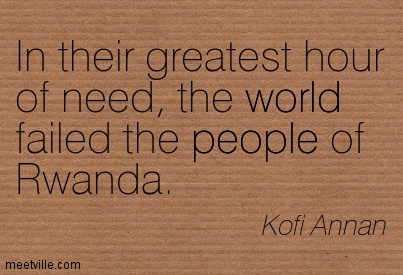
On the day of the interview I chose Romeo Dallaire (Shake Hands with the Devil). A Canadian who was in charge of the United Nations Peace Keeping mission during the Genocide that occurred in Rwanda in 1994. To read his book, to listen to his interviews gives us a glimpse into his humanity as well as his regrets for the Genocide in Rwanda. Some people have called him a hero which he does not accept. In truth, can there really be a hero when over 800 000 people were killed? He tried to tell the United Nations Security Council what was happening in Rwanda, in Africa, but they refused as did the world to act on his warnings. Dallaire considers this his failure. It is one of history’s many examples of how the lives of some people are worth more than the lives of others. There are some people who try to blame Dallaire, now a Canadian Senator, for his failing, the United Nations, the worlds failing in Rwanda. For me he was a voice for humanity, but no one would listen. No matter what we believe about Romeo Dallaire he is a living witness to the Genocide in Rwanda, but more importantly the inaction of the world during the 100 days that humanity was lost.

“If we don’t harness their potential for good, their societies will continue to reap their capacity for evil.” Roméo Dallaire

So as we look back at the atrocities of another Genocide, the United Nation’s Secretary-General Ban Ki-moon spoke at a ceremony, on April 7, 2014 held in the UNDP compound in Kigali to commemorate the UN staff members who lost their lives in the 1994 genocide in Rwanda. He also spoke of the shame of the United Nations and their inaction in helping a country when it needed the world to recognize the lives in Rwanda as are important as any life. A time when the world needed to put politics and economics aside and act on the side of humanity. In April 1994 we all were citizens of our communities and as I look back my voice was silent to the needs of one of our global communities.

There is always great debate in regards to the role of the United Nations, the role of Foreign Aide, the role each of us have as global citizens in interfering with the self-determination of other countries. These discussions result partially because we don’t always use Human Rights as the determining factor in our decisions on when to intervene. If we do use human rights as a criteria it may differ based on where the atrocities are occurring. Human Rights doesn’t seem to be the same for everyone. At times we seem to have a misguided belief that if we can keep our own family safe, we will be safe. We can lock our doors or go inside our gated communities and keep the rest of the world out.

The Secretary-General underlined that “there is a truth to the human condition that is as alarming today as it was 20 years ago; the fragility of our civility. The bonds that hold us together can swiftly disappear.”  

Many of the issues of today where we create policies either political or economic that creates a greater divide between groups of people are risky. Through all the genocides of the past it begins with the propaganda stating the evils of the people who are being targeted. Be it the poor, immigrants or the young when we say things that lessens the value of one group against another, we dehumanize. We find a way to rationalize what we do or more importantly what we don’t do.

If we want a safe world, a world that doesn’t include atrocities like in Rwanda, or issues like child pornography, rape, crimes against the person, we will find ways to measure who we are as a society, a civilization, more importantly a global community by our actions on issues surrounding human rights rather than finding ways to simply believe that if I am safe, nothing else matters.


Further Reading:

African Responses Night And Day From Rwanda

Rwanda genocide: UN ashamed, says Ban Ki-moon

Posted in Political Issues | Tagged , , , , , , , , , | Leave a comment

James W. Hoddinott — Book Launch – McNally Robinson Booksellers

James W. Hoddinott — Book Launch – McNally Robinson Booksellers.

Posted in My Writings | 2 Comments

The Fates


The Fates

The Fates


I am excited to announce that my second novel is completed and now available on-line through Trafford Publications in Hardcover or Paperback as well as through Amazon on a Kindle.

Available in Hardcover and Paperback at Trafford Publishing

To view or purchase hardcover edition click here: The Fates

To view or purchase paperback edition click here: The Fates

On Kindle though Amazon: The Fates

A Book Launch is scheduled on June 4, 2014 

McNally Robinson Booksellers

Winnipeg, Manitoba

“The Fates” follows society’s search for immortality. The exploration of what each of us would sacrifice if it meant that we could live forever. Changing societal values and reducing the importance of community has resulted in a society that continues to put the needs of the individual first. The Fates explores a society made up of those that put their needs ahead of all others versus those that believe the spiritual self is the destiny of all humans. The conflict in a society and each individual that devalues the basic human characteristics that make each of us unique manifests itself in some devastating outcomes.

Each day we are faced with decisions of what each of us value and what each of us will fight for. The youth of today are influenced by an increasingly uncontrolled and self-centered ideas about how they should live. The path is being set in our world where through media we are changing culture. ‘The Fates” at one time may have seemed like science fiction, however with our knowledge of genetics increasing and our belief that immortality can only being obtained through science rather than spiritually or though the legacies we create in making our world a better place for our children. Pierre Elliot Trudeau once said ‘Absolute Power corrupts absolutely’ one can only imagine the results of a society and it’s already declining moral values if we all knew we were living forever and would not have to face the consequences of a life not lived well.

Click here for a sample from the book

About the Author:

James W. Hoddinott is a teacher, resource/special education teacher, and consultant and currently works as a vice principal. James is interested in making a difference in his own life and the lives of others. He is a believer in strength-based education and helping students find what it is that is their gift. He is an advocate for students with special needs and individuals who have not yet found their way. He also believes in creating healthy communities which understands the importance of people. The Fates is his second novel, which focuses on a world where the needs of one or a few are more important than the needs of the many. Imagine a world without a social conscience.

James W. Hoddinott

James W. Hoddinott


Posted in My Writings | Tagged , , , , , , , , , , , | Leave a comment

We have the Knowledge-Just not the Will

Are there too many cars for our own good?

Are there too many cars for our own good?

Sometimes growing older has its challenges. I am not sure I remember the last time I woke-up without some kind of ache or pain. Some people will tell us that as we look back on the way things were we tend to romanticize or be overly sentimental with our memories of days gone by. As we grow older also comes the kind of perspective and knowledge that comes with experience. We also begin to understand that life isn’t forever. If we stop and think about our legacy, our history, our responsibility as to what kind of world we will leave for future generations then perhaps we will take a little more notice and accountability for the world that is being created. What kind of world will we leave for our children and our children’s children?

When I was in Grade 12 my high school English Teacher had everyone in the class write their obituary. An interesting exercise trying to get teenagers to think about how they want to be remembered. Some people live as if they have one life to live so live it to the fullest while others may live their life with a purpose, understanding we are all connected and have a responsibility to do the most with our lives and understand civic and social responsibility. In simplistic terms one view of where a person’s individual needs matter more than community or society’s needs. Of course these beliefs are not mutually exclusive with lots of overlapping. Being over 50, has got me thinking again about my Grade 12 English assignment. How do I want my children and maybe grandchildren to remember me? What are my responsibilities to create a world that is strong, safe and healthy? Am I doing my part to make a better world, a better society?

Long before it became public, the manufacturers of cigarettes had the evidence that smoking was hazardous to your health. They had the knowledge that could have saved millions of lives and who knows how much money. Yet they kept all of that information secret. They didn’t have the will to do the right thing. Smoking or not smoking was not based on informed decisions. The cost to society, human life and health care has been enormous. Many people were knowingly sacrificed so that a few businesses could become rich. Today as well, we are faced with information about poverty, social conditions and most recently updated scientific evidence on climate change. As always, we will have those that say we are being alarmist and that we should ignore what the evidence from the United Nations most recent report on climate change state. Those that want to protect their own interests will say anything to make us doubt that we need to change the way we are living, change our lifestyle to make our planet healthy for future generations.

The science linking human activities to climate change is analogous to the science linking smoking to lung and cardiovascular diseases. Physicians, cardiovascular scientists, public health experts and others all agree smoking causes cancer. And this consensus among the health community has convinced most Americans that the health risks from smoking are real. A similar consensus now exists among climate scientists, a consensus that maintains climate change is happening, and human activity is the cause.

Climate Scientists: We’re Alarmed. Here’s Why You Should Be, Too.

When Al Gore made the brave step of trying to inform the public about climate change it was well received by many, but also he was ridiculed by others for fear mongering. Make no mistake about it those that are opposed to the evidence being presented on the risks of climate change are not unlike those cigarette companies from years ago who maintained the untruths of the risks of cigarette smoking.

We have the knowledge of the risk of climate change. We had it ten years ago. We have the knowledge about the consequences for children living in poverty and we have had that information for years as well but seem to lack the will to do the actions necessary to have a positive impact on either of these situations. In North America it will take significant changes to all of our lifestyles to make our societies more sustainable. It will take some brave leadership to enact the policies required to diminish North America’s reliance on fossil fuels. What can be done to create sustainable lifestyles for future generations? We need to redefine what we need to live.

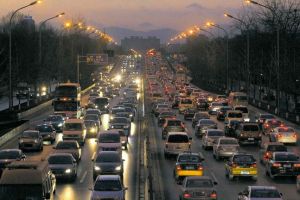
One step would be to create cities that are less reliant on cars. We need governments that understand the impact of CO2 emissions and how it is exacerbated by Urban Sprawl. We need to create walkable communities. We need to create sustainable communities.

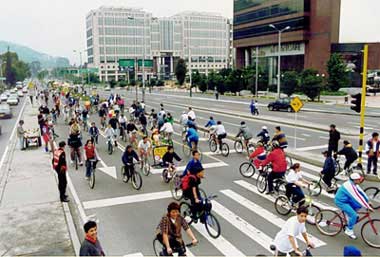
In Bogotá, Columbia a city of over 7 million people in February of 2014 they expanded their 10 year tradition of a car free day to a car free week.

Surely, getting a taste for a car-free life on certain corridors makes people thirst for more. The quality of life in such places improves by leaps and bounds. Cleaner air, quieter streets, more adequate exercise, more human interactions, a cleaner conscience, and the list goes on.

Bogotá car-free day becomes car-free week

Rachel Jaffe of TheCityFix writes. “Other developing countries should follow Bogotá’s example and seek out ways in which sustainable transport can simultaneously help economic, health, and development goals.” Should city planners in North America not be mandated to design sustainable communities? Should governments not be providing incentives to individuals who perhaps only use one car or don’t use cars? Should developers not be given incentives to revitalize communities rather than build suburbs that require people to rely on cars or increase the length of their commute? Should incentives not be put in place to bring back smaller local grocery stores that people can walk to? Should each smaller community not be seen as one sustainable pod that doesn’t require cars in order for people to meet their basic needs?

These kind of changes require us to rethink the way we design and build or upgrade our cities. Despite this knowledge in my community we have just approved two more Urban Sprawl Developments. This despite our Mayor being on record as saying these developments cost our city money. Not only cost our city money but are not environmentally friendly or help us create a sustainable city for future generations.

Each of us can change some of the things we do like recycle, try to use less water but the reality is we need to put the political pressure on our leaders to make the significant policy changes and what initially will be some unpopular decisions that will ensure the long-term survival and well-being of our communities, of our planet. As individuals we need to do this for our children, our grandchildren and future generations. As Political Leaders what will they say to their children and grandchildren when they have been put in positions where they have the moral responsibility to make these decisions but do not have the will to act on the knowledge they have been provided? How will history remember each of us? How will history remember them?

It is time to take the knowledge we have and create the will to make the changes necessary for a better tomorrow.


Other Articles:

The UN’s New Focus: Surviving, Not Stopping, Climate Change  By: Uri Friedman and Svati Kirsten Narula, April 1, 2014

Climate Scientists: We’re Alarmed. Here’s Why You Should Be, Too.  By Joe Romm, March 20, 2014

It’s time for a bigger recall of a seriously defective product: The Car.  By Lloyd Alter, April 3, 2014

Bogotá car-free day becomes car-free week By Zachary Shahan, February 14, 2014

Posted in My Writings, Political Issues | Tagged , , , , , , , , , , , | Leave a comment

The Price of Poverty

poverty

“That this House express its concern for the more than one million Canadian children currently living in poverty and seek to achieve the goal of eliminating poverty among Canadian children by the year 2000.”

House of Commons, unanimous all-party resolution, November 24, 1989.


On November 24th, 2014 it will be the 25th Anniversary of the House of Commons unanimous resolution to eliminate child poverty among Canadian children. Not only a worthy and attainable goal but a goal that will create a culture and society that will be sustainable and happy. Countries are made up of both fiscal and human resources. Countries or people can be rich but not wealthy. Without investment into the human infrastructure of a society, a country cannot be wealthy. The evidence tells us that a concentration on only finances and not the infrastructure, the people required to support a society will be costly. The evidence clearly states the cost of poverty is enormous and yet it has been not only ignored by politicians but the propaganda about the need to only reduce taxes and create a global economy has resulted in an increase in child poverty as well as an increase in poverty generally. A recent study has indicated that at least 1/3 of children in poverty come from homes where at least one parent works. In the almost twenty-five years since this resolution, poverty, especially child poverty, is no closer to being eradicated than in 1989. To complicate matters the gap between the richest Canadians and the rest is growing. Saying something doesn’t make it happen but it is action that will.

tracy1

The cost of ignoring this issue will have long-term negative effects on education costs, health care, crime as well as the inclusion of all our people in our society. The marginalization of an increasing number of Canadians both politically and economically will continue to put a financial burden on our country today and in the future. In April 1999 the Hon. Margaret Norrie McCain and J. Fraser Mustard released a report ‘Reversing the Real Brain Drain’ Early Years Study. The purpose of the report was to understand brain development in the early years and its effect on subsequent learning, behaviour and health. The study concluded that poverty, the nature and nurture in brain development and negative life experiences that may include neglect or absence of appropriate stimulation will have lasting and damaging results. Fraser Mustard did a similar study for South Australia in 2007 (Adelaide: Thinkers in Residence).

The punishment for children being born into poverty in Canada is exclusion from the same educational and job opportunities as those children born into the wealthiest of Canadian families. The wealth of your parents is the greatest indicator of success. Recent studies indicate that for each dollar invested in children there will be a seventeen dollar return in the future. It seems to only be logical then to develop policies that strengthen and support the elimination of poverty. If it makes sense fiscally as well as benefits people and the well-being of society, then why does it not result in the policies required to reduce and eventually eliminate child poverty. Why is there not a larger investment in education, health and training? Why are policy makers not finding ways to create jobs that pay well so that working families do not have to live in poverty? Why are current policies on tax reduction and fiscal development focused on helping only a small portion of people?

A business that makes nothing but money is a poor business.

Henry Ford

It is the political rhetoric over the last 25 years in Canada that have made the fiscal economy the focus. The mendacity of the belief in what at one time was called Reaganomics or the Trickle-down theory. There is no evidence that making the rich richer will improve the well-being or reduce poverty for the majority or make Canada sustainable. The data actually shows the opposite. It shows the gap between rich and poor widening. Yet despite evidence not only in Canada but globally that a more comprehensive approach to reducing poverty and increasing the well-being of a society is required, we remain stuck with policies that will not address the real issues facing Canada.

Health Care, crime reduction, education are seen as spending rather than investing. Development of social policies that provide livable wages, pensions, and educational opportunities for everyone will result in a reduction of the symptoms causing an increase in unhealthy Canadians as a result of poverty.

There is one rule for the industrialist and that is: Make the best quality of goods possible at the lowest cost possible,

paying the highest wages possible.

Henry Ford

Times have changed since the days of Henry Ford. Businesses no longer need people to make money. The global economy has meant outsourcing of labour to reduce costs of products. Money made through investing and how well a company is doing is not based on sustainable elements but rather the profit the company has made. The speculation and untruthfulness to money markets makes the paying of livable wages with pensions not a necessity for financial success. Current policies support protecting and enhancing the lives of a small group of people rather than concerning itself with the health and sustainability of our country.

We need to change the way we think. If we are going to reduce or eliminate child poverty, poverty generally, we need to think of health, education, training as investments not spending. We need to pay now as our human infrastructure deficit is increasing and unless we reverse the trend our children will be burdened with a Canada we no longer recognize.


Other Articles:

Manitoba’s shocking poverty rate, By Paul S. Graham on January 6, 2013

Anti-poverty group urges end of child tax benefits, Allison Jones, The Canadian Press, November 21, 2012 Read more:

Posted in My Writings, Political Issues | Tagged , , , , , , , , | 3 Comments